AI Ecommerce Automation: Save Time, Grow Faster
- Ubaid Rehman
- July 18, 2026
- AI Technology, AI Tools
- 0 Comments
AI ecommerce automation has changed how I look at online selling. I used to think I needed more staff, more hours, and more tools to grow. Then I learned that smart systems can handle many daily jobs without making the store feel cold or robotic. AI for online stores helps with product ideas, stock checks, emails, support, ads, and customer care. The best part is simple. I can save time and still give buyers a better shopping trip. Many ecommerce AI tools now work with common store platforms, so I do not need to be a tech expert. Shop automation also helps small store owners compete with larger brands. It cuts repeated tasks and gives me more time for pricing, content, and customer trust. In this guide, I will share how I use AI in a clear and safe way. I will also show where it helps most, what tools matter, and what mistakes to avoid.
What AI Ecommerce Automation Means for AI for Online Stores
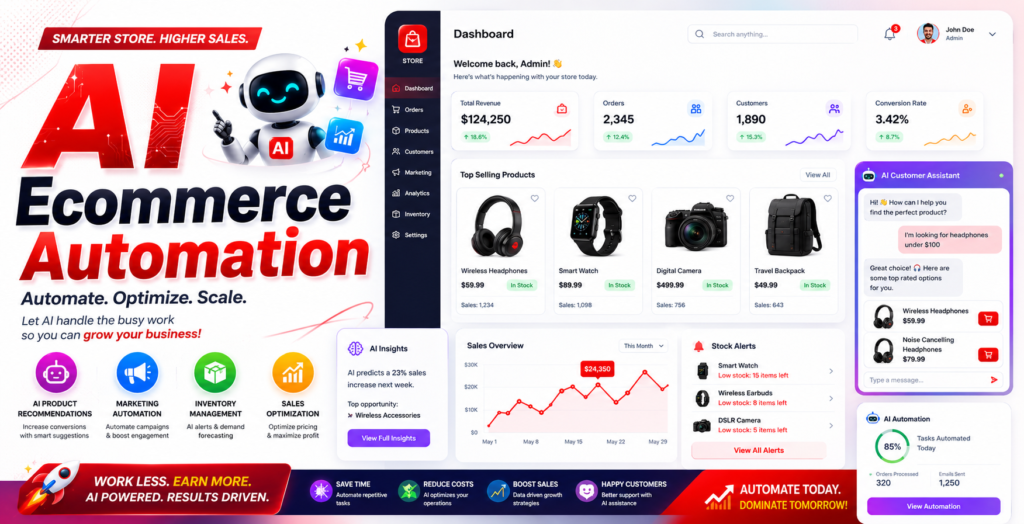
AI ecommerce automation means using smart software to handle store tasks with less manual work. It does not mean I hand over my whole business to a bot. Instead, I use AI for online stores to speed up tasks that take time each day. For example, I can write product drafts, sort support tickets, check stock risks, and send cart emails. ecommerce AI tools can also study buyer behavior and suggest what each person may want next. This helps me make better choices without staring at reports for hours. Shop automation works best when I set clear rules first. I still review key steps, such as product claims, refund issues, and ad spend. As a result, the store stays human, useful, and easier to manage. Good automation supports my work. It does not replace my judgment or brand voice.
Why AI Ecommerce Automation Matters for Small Store Owners
AI ecommerce automation matters because most small store owners wear too many hats. I may be the buyer, writer, support agent, marketer, and planner in one day. That can lead to missed orders, slow replies, and weak product pages. AI for online stores helps reduce that pressure. For instance, ecommerce AI tools can draft replies for common questions, such as shipping times or return steps. Then I can check the message and send it faster. Shop automation also helps me keep up during busy seasons. When sales rise, simple tasks rise too. If I wait too long to answer buyers, trust drops. If I miss stock updates, sales get lost. However, when I set up smart workflows, the store feels more steady. Buyers get faster help, and I get more time to improve the offer.
Main Areas Where Ecommerce AI Tools Improve Shop Automation
AI ecommerce automation works best when I apply it to clear store problems. I do not add tools just because they sound new. I start with tasks that repeat often and affect money or trust. AI for online stores can help with product data, search, emails, reviews, ads, and support. ecommerce AI tools can also help find patterns that I may miss. For example, a tool may show that buyers who view one product often buy a related item. Then I can add a bundle or a better cross-sell. Shop automation makes these changes faster and more consistent. Still, I avoid full auto mode for sensitive tasks. Refunds, complaints, and legal claims need care. Below are the main areas where I see the most value in daily store work.
| Store Area | How AI Helps | Best Human Check |
|---|---|---|
| Product Pages | Writes drafts, titles, FAQs, and feature points. | Check facts, tone, claims, and brand fit. |
| Customer Support | Sorts tickets and drafts answers for common issues. | Review refunds, angry buyers, and special cases. |
| Email Marketing | Sends cart, welcome, and win-back flows. | Check offers, timing, and message tone. |
| Stock Planning | Finds low-stock risks and sales trends. | Confirm supplier dates and demand shifts. |
AI Ecommerce Automation for Product Pages and Ecommerce AI Tools
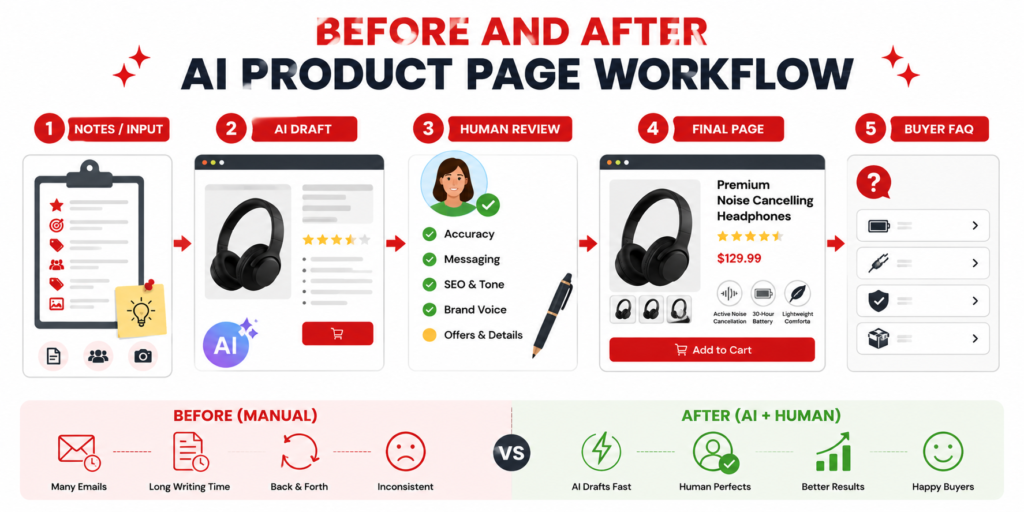
AI ecommerce automation can make product pages much faster to build. I still need real product facts, clear photos, and honest claims. Yet AI for online stores can turn basic notes into a helpful first draft. ecommerce AI tools can suggest titles, short descriptions, size guides, and question answers. This saves time when I upload many items at once. Shop automation also helps keep page formats the same. For example, every product can include benefits, use tips, care notes, and shipping details. That makes the store easier to scan. However, I never publish AI text without review. A tool may add claims that are not true. It may also use words that do not fit my brand. So I treat AI as a writing helper, not the final editor.
- Use AI for first drafts: I give the tool product specs, target buyer details, and tone notes. Then I edit the text for truth and clarity.
- Keep product claims safe: I avoid health, income, or result claims unless I can prove them. This keeps the page safer for users and search engines.
- Add buyer questions: I use common support questions to build page FAQs. This reduces repeat tickets and helps shoppers decide faster.
Shop Automation for Customer Support With AI for Online Stores
AI ecommerce automation can improve support when I use it with care. Buyers want quick answers, but they also want respect. AI for online stores can sort messages by topic, such as shipping, returns, size, or payment. ecommerce AI tools can draft replies based on my policies. Then I can approve or edit each answer. Shop automation can also send instant replies for simple questions. For example, a buyer may ask, “Where is my order?” The system can share the tracking link at once. This lowers stress for the buyer and the store team. However, I keep human review for upset buyers, payment issues, and damaged items. A cold reply can make a bad case worse. Good support automation speeds up service, while still keeping care in the process.
AI Ecommerce Automation for Email, Ads, and Retargeting
AI ecommerce automation helps me reach shoppers at the right time. Many people visit a store, add items, and leave. That does not always mean they lost interest. AI for online stores can send a cart reminder, a product tip, or a small offer based on behavior. ecommerce AI tools can also test subject lines and send times. This helps me learn what buyers open and click. Shop automation is useful for welcome emails, post-purchase guides, review requests, and win-back flows. Still, I keep the message honest and simple. I do not use fake urgency or unclear discounts. I also avoid sending too many emails. A helpful email builds trust. A noisy email makes buyers unsubscribe. The goal is to guide, not push.
Best Ecommerce AI Tools for AI Ecommerce Automation
AI ecommerce automation works better when the tool matches the need. I do not need every app in the market. I choose tools that fix one clear problem and work with my store platform. AI for online stores may include chat tools, email tools, search tools, review tools, and product content tools. ecommerce AI tools should also be easy to control. I want clear settings, reports, and simple ways to stop a workflow. Shop automation should not create hidden errors. Before I pay for any tool, I test it with real tasks. I check if it saves time, improves buyer experience, and keeps data safe. If it adds confusion, I remove it. A small, clean tool stack beats a messy set of apps.
- AI chat and helpdesk tools: These tools answer common questions and sort tickets. I use them for speed, but I still handle sensitive cases myself.
- AI product content tools: These tools help create product titles, descriptions, and FAQs. I review every line before publishing.
- AI email tools: These tools build flows for carts, welcome series, and review requests. I keep emails short, useful, and honest.
- AI search tools: These tools improve store search results and product discovery. This helps buyers find the right item faster.
- AI stock tools: These tools predict stock needs based on sales data. I still confirm supplier timelines before making big orders.
For more store growth ideas, I also recommend reading my internal guide on ecommerce SEO checklist for online stores. It pairs well with AI ecommerce automation because traffic and automation should work together. You can also review Google Merchant Center Help for product data rules and shopping feed guidance. AI for online stores can support many store tasks, but trusted rules still matter. ecommerce AI tools work best when product data stays clean and clear. Shop automation should also follow ad rules, privacy rules, and platform terms. This keeps the store safer and more stable over time.
How I Set Up Shop Automation Without Making the Store Feel Robotic
AI ecommerce automation should make the store feel faster, not fake. I start with one workflow, then test it before adding more. For example, I may begin with abandoned cart emails. Next, I set the trigger, message, time delay, and stop rule. AI for online stores can suggest the message, but I edit it in my own voice. ecommerce AI tools can track results, such as opens, clicks, and sales. Shop automation needs clear limits too. I stop emails after a purchase. I avoid sending the same offer too often. I also check the buyer journey on my phone. This helps me see what shoppers see. If the flow feels annoying, I fix it. Simple rules make automation useful and keep the store personal.
Step-by-Step AI Ecommerce Automation Plan for Beginners
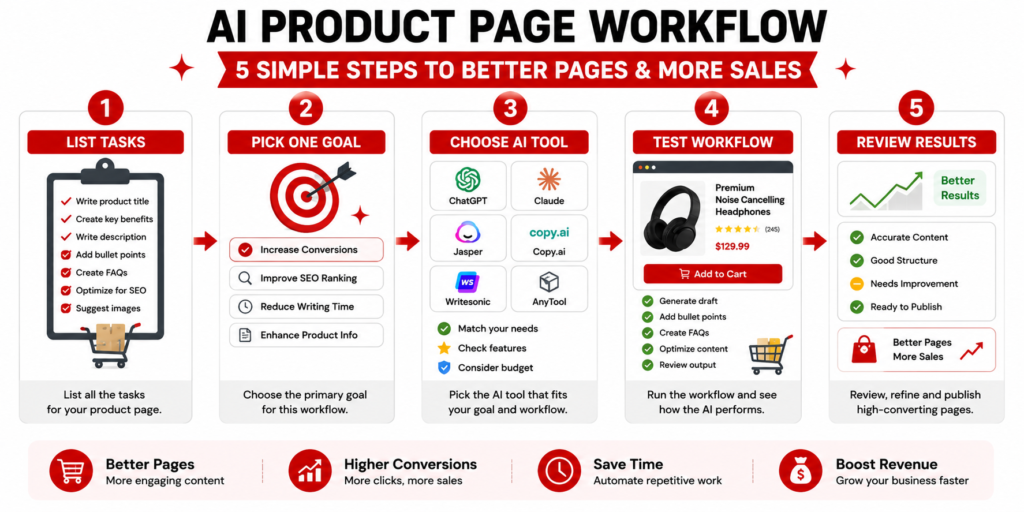
AI ecommerce automation becomes easier when I follow a simple plan. First, I list tasks I repeat each week. Then I choose the task that wastes the most time or causes the most errors. AI for online stores should solve that task before I add more. Next, I pick one tool and test it on a small scale. ecommerce AI tools often offer trials, so I use that time well. I check setup time, accuracy, cost, and support. Shop automation also needs a review routine. I set a weekly check to read reports and scan messages. If a workflow does not help, I pause it. This approach keeps spending under control. It also helps me learn what the store truly needs.
- Start with one goal: I choose a goal like fewer support tickets or more cart recovery. This keeps the setup focused.
- Use clear rules: I define when each workflow starts and stops. Clear rules prevent repeat messages and buyer frustration.
- Review weekly: I check results, errors, and customer feedback. This helps me improve without guessing.
Common Mistakes With AI Ecommerce Automation and Ecommerce AI Tools
AI ecommerce automation can cause problems when I use it without checks. One common mistake is trusting every AI draft. AI for online stores can write fast, but it can also make errors. Product claims, shipping times, and return rules must be correct. Another mistake is adding too many ecommerce AI tools at once. Too many apps can slow the site, raise costs, and confuse the team. Shop automation can also annoy buyers if messages fire too often. I watch for repeated emails, wrong names, bad product picks, and poor timing. I also avoid copying the same AI text across many pages. Search engines and buyers both prefer useful, original content. Smart automation needs human review, clean data, and simple goals.
How AI for Online Stores Helps With Personal Shopping
AI ecommerce automation can make shopping feel more helpful when done well. I like using data to guide buyers, but I do not want to invade privacy. AI for online stores can suggest items based on viewed products, past orders, or popular bundles. ecommerce AI tools can also show size tips, care notes, or matching items. Shop automation can place these suggestions in emails, product pages, or checkout pages. This can raise order value without pushy sales tricks. For example, if someone buys a coffee maker, I may suggest filters, cleaner, or a storage jar. That feels useful because it fits the purchase. I also keep recommendations easy to ignore. Buyers should feel helped, not trapped. Trust grows when suggestions make sense.
Measuring Results From AI Ecommerce Automation
AI ecommerce automation needs tracking, or I cannot know what works. I do not judge a tool by fancy claims. I judge it by results. AI for online stores should improve clear numbers, such as response time, cart recovery, order value, stock accuracy, or content speed. ecommerce AI tools usually include reports, but I also compare data inside my store platform. Shop automation can look strong at first, yet still create hidden issues. For example, an email flow may gain sales but also raise unsubscribes. A chatbot may answer fast but give weak replies. So I track both numbers and customer feedback. I keep what helps buyers and remove what hurts trust. Clear tracking makes automation safer and more profitable.
| Metric | Why It Matters | What I Watch |
|---|---|---|
| Response Time | Fast replies improve buyer trust. | Average first reply time and solved tickets. |
| Cart Recovery | Recovered carts bring back lost sales. | Recovered revenue and unsubscribe rate. |
| Product Page Speed | Faster content helps launch items sooner. | Draft time, edits needed, and page quality. |
| Stock Accuracy | Better stock planning prevents lost orders. | Stockouts, overstock, and supplier delays. |
Privacy and Trust in AI Ecommerce Automation
AI ecommerce automation must respect customer data. I only collect data that helps run the store and serve buyers. AI for online stores can use order history, browsing actions, and support messages. However, I keep data use clear in my privacy policy. ecommerce AI tools should have strong data controls, safe access, and clear terms. Shop automation should never expose private details in emails or chat replies. I also limit staff access to customer data. This reduces risk and builds trust. Buyers may not know every tool I use, but they can feel when a store acts responsibly. I avoid shady tracking, fake reviews, and unclear opt-ins. A trusted store earns repeat buyers. That matters more than any short-term sales trick.
Conclusion: My Simple Take on AI Ecommerce Automation
AI ecommerce automation is most useful when it supports real store goals. I use it to save time, reduce errors, and serve buyers faster. AI for online stores helps with product pages, support, email, stock, and product suggestions. ecommerce AI tools can give helpful ideas, but I still check facts and tone. Shop automation works best with clear rules, honest messages, and regular review. I do not see AI as a magic fix. I see it as a smart helper that handles repeat work. The real value comes from pairing tools with care, good products, and trust. If you run an online store, start small. Pick one task, test one workflow, and track the result. Then build from there with calm and control.
FAQs About AI Ecommerce Automation
What is AI ecommerce automation?
AI ecommerce automation means using smart tools to handle repeated online store tasks. These tasks can include support replies, product drafts, email flows, stock alerts, and product suggestions. AI for online stores helps me work faster without hiring for every small job. ecommerce AI tools can also study buyer actions and give useful ideas. Shop automation works best when I set rules and review results.
Is AI for online stores good for small businesses?
Yes, AI ecommerce automation can help small stores a lot. Small teams often have limited time and tight budgets. AI for online stores can reduce daily work and improve response speed. ecommerce AI tools also help create product text, send emails, and spot sales trends. Shop automation lets small stores act more organized without losing a human touch.
Which ecommerce AI tools should I start with?
I would start with tools that solve one clear problem. If support takes too much time, try an AI helpdesk. If product uploads are slow, try an AI content tool. AI ecommerce automation should match your store needs. AI for online stores can help in many ways, but ecommerce AI tools work best when you start small. Shop automation should save time, not create more work.
Can shop automation hurt customer trust?
Yes, shop automation can hurt trust when it feels spammy or wrong. AI ecommerce automation needs human review and clear limits. AI for online stores should not send too many emails or make false claims. ecommerce AI tools can make mistakes, so I check key messages. Buyers trust stores that are clear, honest, and helpful.
Does AI ecommerce automation improve SEO?
AI ecommerce automation can support SEO, but it does not replace good strategy. AI for online stores can help draft product pages, FAQs, and meta text. ecommerce AI tools can also find missing content and common buyer questions. Shop automation helps keep pages organized. Still, I edit all content for accuracy, value, and a natural tone before publishing.